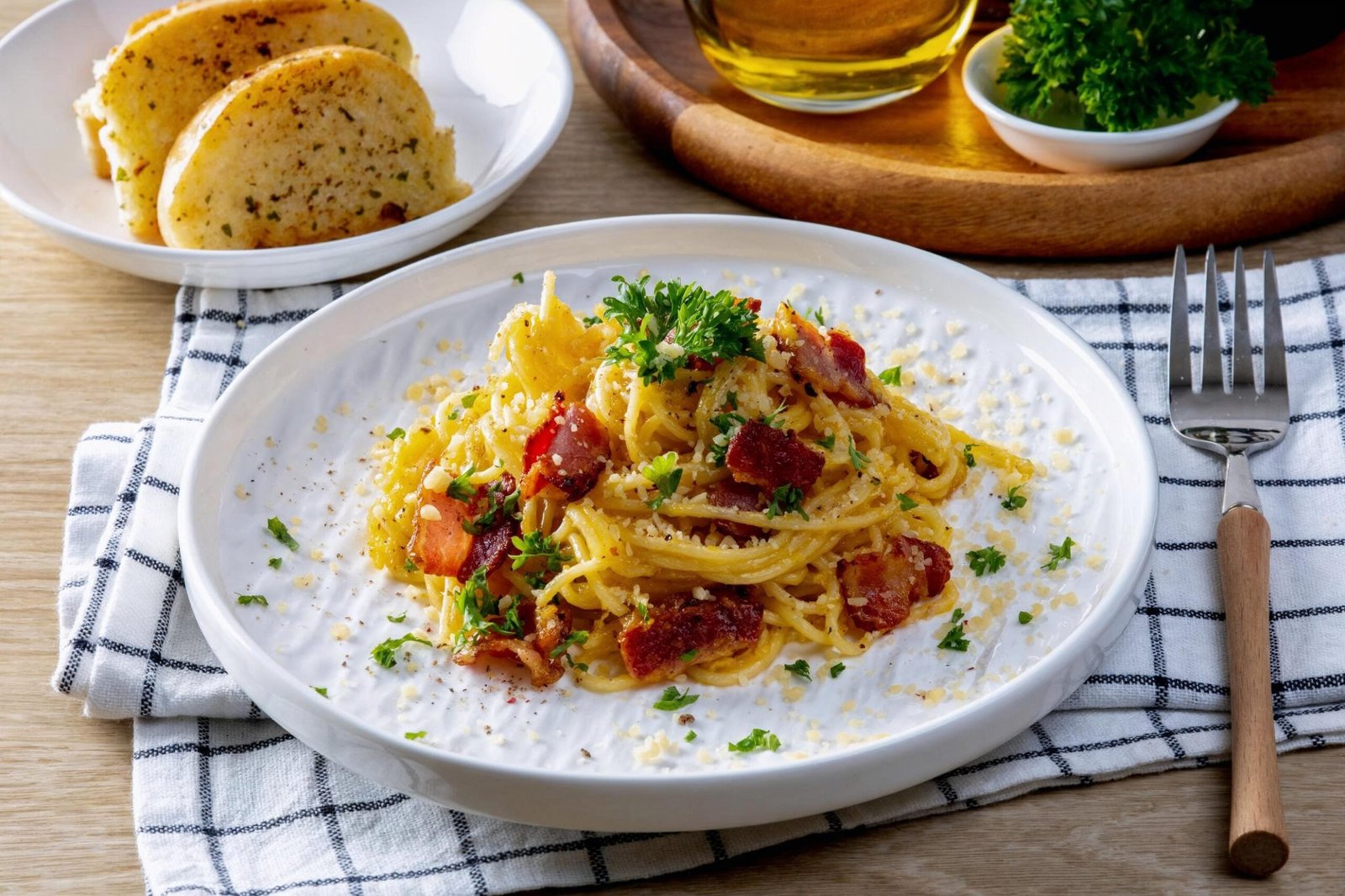
- A Spaghetti Carbonara is one of Italy’s most famous pasta dishes, loved for its rich, silky sauce, perfectly cooked spaghetti, crispy pancetta, and freshly grated Parmesan cheese. Unlike cream-based pasta recipes, authentic Carbonara achieves its creamy texture using eggs, cheese, hot pasta, and pasta water, creating a smooth and luxurious sauce without becoming heavy.
- Making homemade Spaghetti Carbonara is surprisingly simple when you follow the correct technique. The secret lies in cooking the pasta until perfectly al dente, preparing the egg and cheese mixture correctly, and combining everything over gentle heat so the eggs create a silky sauce instead of scrambling.
- This classic Italian pasta is perfect for lunch, dinner, family meals, or special occasions. While traditional Carbonara uses pancetta or guanciale, you can also prepare delicious variations using turkey bacon, chicken, mushrooms, or smoked beef. Every bite delivers the perfect combination of creamy sauce, crispy meat, savory cheese, and freshly cracked black pepper.
- The most important step is mixing the egg and cheese sauce with the hot pasta away from direct heat while gradually adding reserved pasta water to create a smooth, restaurant-style Carbonara.
Recipe Information
| Details | Information |
|---|---|
| Cuisine | Italian |
| Course | Main Course |
| Preparation Time | 10 Minutes |
| Cooking Time | 20 Minutes |
| Total Time | 30 Minutes |
| Difficulty | Easy |
| Servings | 4 |
| Calories | Approximately 610 kcal per serving |
Ingredients

For the Pasta
| Ingredient | Quantity |
|---|---|
| Spaghetti | 400 g |
| Water | For Boiling |
| Salt | 1 tbsp |
For the Carbonara Sauce
| Ingredient | Quantity |
|---|---|
| Large Eggs | 3 |
| Egg Yolks | 2 |
| Parmesan Cheese (Grated) | ¾ Cup |
| Pecorino Romano Cheese (Grated) | ¼ Cup |
| Freshly Ground Black Pepper | 1 tsp |
| Garlic (Optional) | 2 Cloves |
| Olive Oil | 1 tbsp |
For the Protein
| Ingredient | Quantity |
|---|---|
| Pancetta or Guanciale | 200 g |
| Fresh Parsley | For Garnish |
Equipment Needed
- Large cooking pot
- Large frying pan
- Mixing bowl
- Whisk or fork
- Tongs
- Colander
- Measuring cups and spoons
Step 1 – Boil the Spaghetti

- Fill a large cooking pot with plenty of water and bring it to a rolling boil over high heat. Once the water begins boiling, add one tablespoon of salt and stir until it dissolves completely. The salted water seasons the spaghetti while it cooks, giving the pasta better flavor from the inside.
- Place the spaghetti into the boiling water and gently press it down as it softens until all the strands are submerged. Stir occasionally during cooking to prevent the spaghetti from sticking together. Cook according to the package instructions until the pasta reaches an al dente texture, meaning it should be tender with a slight firmness in the center.
- Before draining the pasta, carefully reserve approximately 1 cup of the starchy pasta water. This reserved water is one of the key ingredients in Carbonara because it helps create the silky, creamy sauce. Drain the spaghetti well but do not rinse it, as the starch remaining on the pasta helps the sauce cling beautifully to every strand.
Step 2 – Prepare the Egg and Cheese Mixture

- While the pasta is cooking, crack the whole eggs and egg yolks into a large mixing bowl. Add the grated Parmesan cheese, grated Pecorino Romano cheese, and freshly ground black pepper. Using a whisk or fork, beat the mixture until it becomes smooth, creamy, and fully combined.
- The cheese should blend evenly into the eggs, forming a thick golden mixture without lumps. This egg and cheese mixture will later become the creamy Carbonara sauce using only the heat from the freshly cooked pasta.
- If you prefer a subtle garlic flavor, grate or finely mince two garlic cloves and keep them ready for cooking with the pancetta. Do not add the eggs directly to a hot pan because they can scramble. Keeping the mixture at room temperature ensures it blends smoothly with the hot spaghetti during the final cooking stage.
Step 3 – Cook the Pancetta

- Heat a large frying pan over medium heat and add one tablespoon of olive oil if needed. Add the diced pancetta or guanciale and cook slowly for approximately 6–8 minutes, stirring occasionally until the meat becomes beautifully golden and crispy while releasing its flavorful fat
- If using garlic, add the minced garlic during the final minute of cooking. Stir gently until the garlic becomes fragrant, taking care not to let it burn, as burnt garlic can create a bitter taste.
- Once the pancetta becomes crisp, reduce the heat to low and keep the pan warm. Do not discard the rendered fat because it adds incredible flavor to the Carbonara sauce. The crispy pancetta, combined with the hot spaghetti and egg mixture in the next steps, creates the signature rich and authentic taste of classic Italian Spaghetti Carbonara.
Spaghetti Carbonara Recipe – Creamy, Authentic Italian & Restaurant-Style (Part 2)
Step 4 – Combine the Spaghetti with the Pancetta
- Transfer the freshly drained spaghetti directly into the frying pan with the crispy pancetta and its flavorful rendered fat. Using kitchen tongs, gently toss the spaghetti until every strand is evenly coated with the delicious fat released from the pancetta. This step allows the pasta to absorb the smoky, savory flavor before the creamy Carbonara sauce is added.
- Cook over low heat for about 1 minute, tossing continuously so the spaghetti stays hot without becoming dry. If the pasta seems slightly dry, add 2–3 tablespoons of the reserved pasta water and continue mixing. The starchy water helps create a glossy coating while preparing the pasta for the egg mixture.
- Once the spaghetti is evenly coated, remove the frying pan from the heat completely. This is an essential step because adding the egg mixture over direct heat can cause the eggs to scramble instead of forming a smooth sauce. The pasta should remain hot enough to gently cook the eggs while creating the signature creamy Carbonara texture.
Step 5 – Create the Creamy Carbonara Sauce

- While the spaghetti is still very hot but off the heat, slowly pour the prepared egg and cheese mixture over the pasta. Immediately begin tossing the spaghetti continuously using kitchen tongs or two large forks. The residual heat from the pasta gently cooks the eggs, transforming them into a silky, creamy sauce that coats every strand.
- As you continue tossing, gradually add the reserved pasta water one tablespoon at a time until the sauce reaches a smooth, glossy consistency. The starch in the pasta water helps emulsify the eggs and cheese, creating the luxurious restaurant-style Carbonara sauce.
- Avoid rushing this process. Continuous tossing is the key to preventing lumps and ensuring the sauce remains silky instead of becoming scrambled. The finished sauce should cling beautifully to the spaghetti, leaving it creamy without appearing watery or overly thick.
Step 6 – Adjust the Texture and Finish the Pasta

- Taste the Carbonara and adjust the seasoning if necessary. Sprinkle in a little more freshly ground black pepper for a classic Italian flavor. If you enjoy a richer taste, add a small handful of freshly grated Parmesan cheese and gently toss again until it melts into the warm sauce.
- If the sauce becomes thicker as it sits, simply stir in another tablespoon of warm reserved pasta water until it becomes smooth and silky again. Avoid reheating the pasta over high heat because excessive heat can cause the egg-based sauce to separate or become grainy.
- Continue tossing gently until every strand of spaghetti is evenly coated in the creamy sauce and the crispy pancetta is distributed throughout the dish. The finished Carbonara should have a glossy appearance, tender spaghetti, crispy pancetta pieces, and a rich, velvety sauce without any scrambled eggs.
Spaghetti Carbonara Recipe – Creamy, Authentic Italian & Restaurant-Style (Part 3)
Step 7 – Garnish and Final Touch

- Once the Carbonara sauce has reached a smooth and silky consistency, transfer the pasta to warm serving plates using kitchen tongs. Twirl the spaghetti neatly into a high mound for an elegant restaurant-style presentation. This not only makes the dish look more appealing but also helps keep the creamy sauce evenly distributed throughout the past
- Sprinkle a generous amount of freshly grated Parmesan cheese over the top while the pasta is still hot so it melts slightly into the sauce. Finish with freshly cracked black pepper, which is one of the signature flavors of authentic Carbonara. Add a small amount of finely chopped fresh parsley for a touch of freshness and vibrant color.
- For an even richer finish, drizzle a few drops of extra virgin olive oil over the pasta just before serving. The finished Carbonara should have a glossy, creamy appearance with crispy pancetta pieces evenly distributed throughout the spaghetti. Every strand should be coated in the silky cheese and egg sauce without appearing dry or watery.
Step 8 – Serve and Enjoy

- Serve the Spaghetti Carbonara immediately while it is still hot, creamy, and freshly prepared. Carbonara is best enjoyed as soon as it is finished because the sauce has the perfect silky consistency when served immediately. Pair it with warm garlic bread, a crisp Caesar salad, roasted vegetables, or toasted Italian bread for a complete restaurant-style meal.
- Place extra grated Parmesan cheese and freshly cracked black pepper on the table so everyone can customize their serving. If desired, garnish with a few extra parsley leaves and an additional sprinkle of Pecorino Romano cheese for a richer Italian flavor.
- Every bite should deliver perfectly cooked spaghetti coated in a creamy sauce with crispy pancetta, rich Parmesan, and aromatic black pepper. This classic Italian dish is perfect for family dinners, romantic meals, weekend lunches, or special occasions where you want an authentic restaurant-quality pasta experience.
👨🍳 Chef Tips
| Tip | Benefit |
|---|---|
| Cook spaghetti al dente | Keeps the pasta firm and prevents mushiness |
| Reserve pasta water | Creates a silky, creamy sauce |
| Use freshly grated cheese | Melts better and improves flavor |
| Remove the pan from heat before adding eggs | Prevents scrambled eggs |
| Toss continuously | Creates a smooth Carbonara sauce |
| Cook pancetta until crispy | Adds rich flavor and texture |
| Use freshly cracked black pepper | Gives authentic Italian taste |
| Serve immediately | Best creamy texture |
⚠️ Common Mistakes
| Mistake | Solution |
|---|---|
| Overcooking the spaghetti | Cook until al dente |
| Adding eggs over direct heat | Remove the pan from heat first |
| Forgetting pasta water | Reserve at least 1 cup before draining |
| Using cold eggs | Bring eggs to room temperature |
| Overheating the sauce | Toss gently off the heat |
| Too much salt | Taste before adding extra because the cheese is already salty |
| Using pre-grated cheese | Freshly grate the cheese for smoother melting |
| Letting the pasta sit too long | Serve immediately for the best texture |
🍝 Delicious Variations
- Classic Carbonara – Traditional pancetta, eggs, Parmesan, and Pecorino Romano.
- Chicken Carbonara – Add grilled chicken breast slices.
- Turkey Bacon Carbonara – Replace pancetta with turkey bacon.
- Mushroom Carbonara – Add sautéed mushrooms for an earthy flavor.
- Garlic Carbonara – Increase the garlic for extra aroma.
- Spicy Carbonara – Add chili flakes for gentle heat.
- Seafood Carbonara – Add sautéed shrimp for a seafood version.
- Vegetarian Carbonara – Replace pancetta with mushrooms and roasted vegetables.
🍽️ Serving Suggestions
- Spaghetti Carbonara pairs perfectly with:
- 🥖 Garlic Bread
- 🥗 Caesar Salad
- 🥬 Fresh Green Salad
- 🧄 Garlic Breadsticks
- 🫒 Marinated Olives
- 🥦 Roasted Broccoli
- 🍅 Bruschetta
- 🥤 Sparkling Water or Fresh Lemonade
❄️ Storage & Reheating
| Storage Method | Recommended Time |
|---|---|
| Refrigerator | Up to 2 Days |
| Freezer | Not Recommended |
Store leftover Carbonara in an airtight container and refrigerate promptly. Because the sauce is made with eggs and cheese, it is best enjoyed fresh. To reheat, warm the pasta gently in a skillet over low heat, adding a small splash of warm milk or reserved pasta water while stirring continuously. Avoid high heat, as it can cause the sauce to separate or become grainy.
🥗 Nutrition Facts
- Approximate values per serving
| Nutrient | Amount |
|---|---|
| Calories | 610 kcal |
| Protein | 28 g |
| Carbohydrates | 58 g |
| Fat | 29 g |
| Fiber | 3 g |
| Sugar | 3 g |
| Sodium | 780 mg |
- Nutrition values are approximate and may vary depending on the ingredients used.
❓ Frequently Asked Questions
1. Can I make Carbonara without pancetta?
Yes. You can use turkey bacon, smoked beef, grilled chicken, or mushrooms as alternatives.
2. Why did my eggs scramble?
This happens when the egg mixture is added over direct heat. Always remove the pan from the heat before mixing.
3. Can I use cream in Carbonara?
Traditional Italian Carbonara does not use cream. The creamy texture comes from eggs, cheese, and pasta water.
4. Which cheese is best for Carbonara?
A combination of Parmesan and Pecorino Romano provides the most authentic flavor.
5. Why is pasta water important?
The starch in the pasta water helps create a smooth, silky sauce that coats the spaghetti perfectly.
6. Can I prepare Carbonara ahead of time?
It is best served immediately, as reheating can affect the sauce’s texture.
7. Can I use another type of pasta?
Yes. Fettuccine, linguine, bucatini, or rigatoni also work well.
8. How do I make the sauce extra creamy?
Use room-temperature eggs, freshly grated cheese, hot pasta, and gradually add reserved pasta water while tossing continuously.